Dragon Romantasy Book Builder Review: AI-Powered Novel Creation for Fantasy Writers
An independent look at Dragon Romantasy Book Builder (Dragon Romantasy GPT) — a guided Custom GPT that turns a one-sentence fantasy-romance idea into characters, world rules, a 30-chapter blueprint and a drafted first chapter.
At a glance
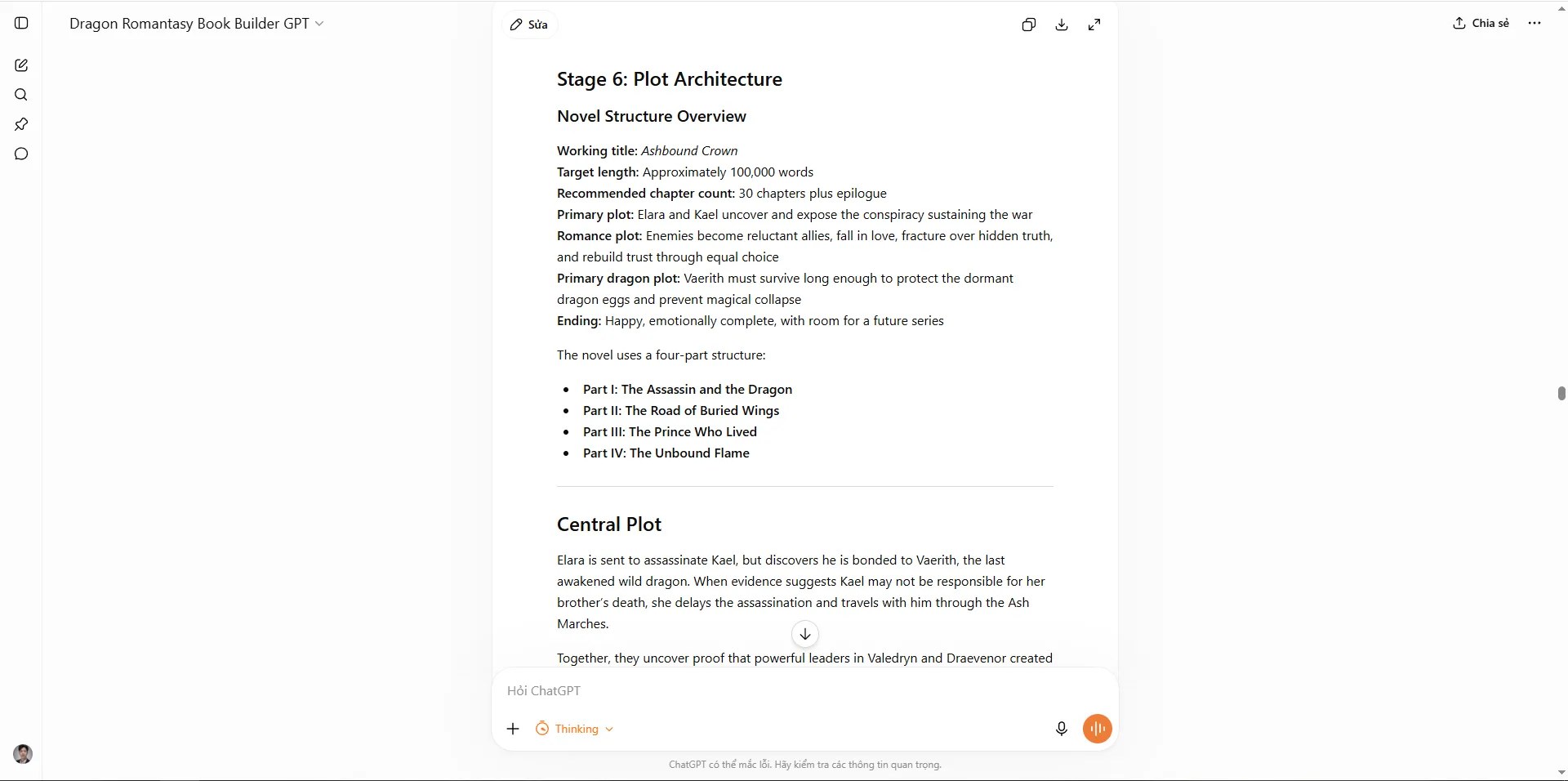
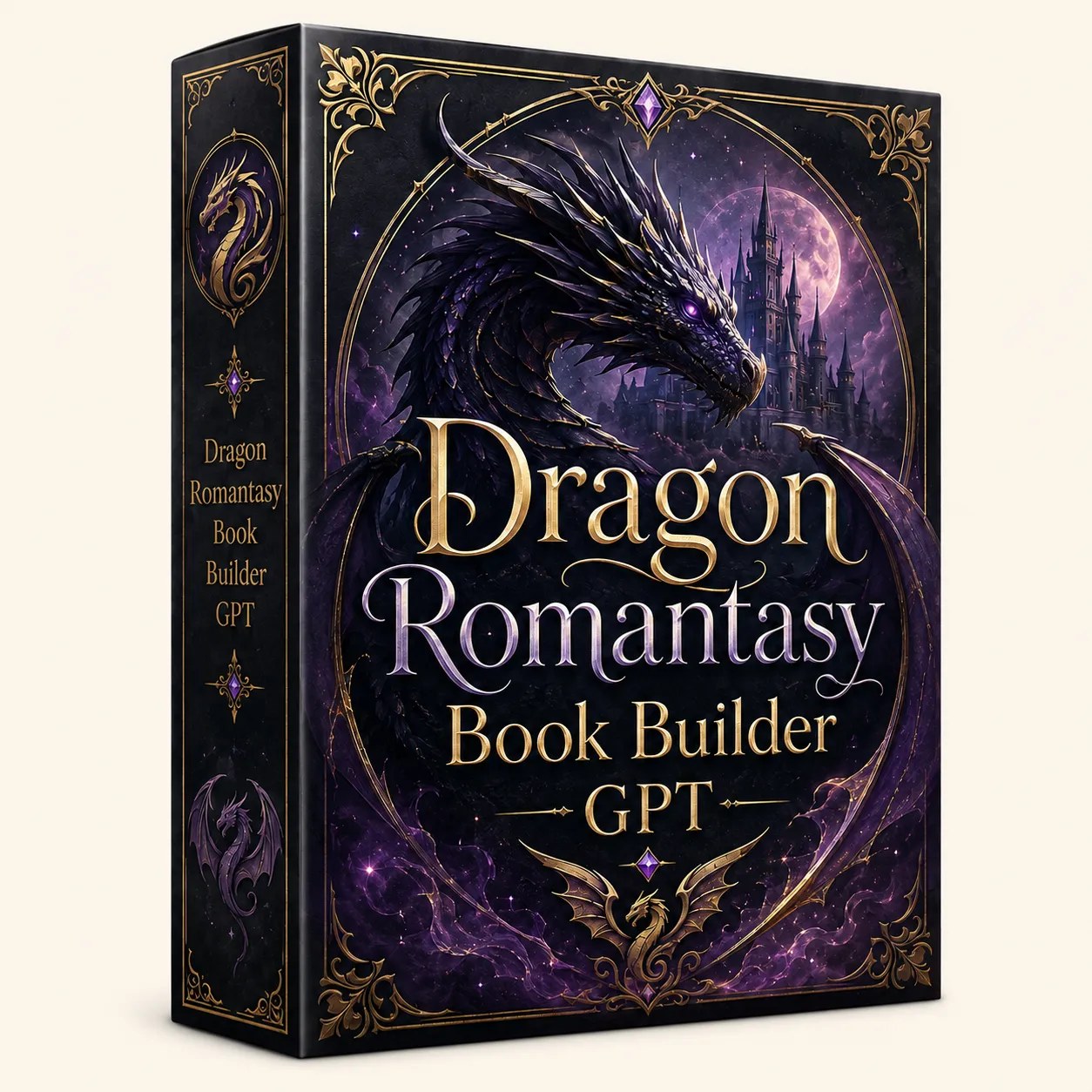
Dragon Romantasy Book Builder is a guided writing system delivered as a ChatGPT Custom GPT. Rather than asking a writer to generate a novel from one open prompt, it moves through fixed stages — concept, characters, world, romance structure, chapter blueprint — and only then begins drafting prose.
- Product type
- Guided Custom GPT for fantasy-romance novel development
- Listed price
- $17 one-time (vendor pricing may change)
- Requirement
- A ChatGPT account with access to Custom GPTs
- Core output
- Story bibles, 30-chapter blueprint and a drafted Chapter One
What is Dragon Romantasy Book Builder?
Dragon Romantasy Book Builder — also referred to as Dragon Romantasy GPT — is an AI-assisted creative-writing product aimed at a very specific reader: someone who has consumed a great deal of dragon romance or fantasy romance and has carried a story idea for years without ever turning it into a manuscript. It is delivered as a Custom GPT that runs inside ChatGPT, and it packages a named process the vendor calls the Bond-to-Book Framework.
The problem it addresses is not a shortage of ideas. It is the fact that a blank page asks a first-time novelist to invent a world, build two emotionally credible leads, control a slow-burn romance, time the reveals and write publishable sentences all at the same time. Most premises collapse under that combined load. The product's answer is sequencing: each creative decision is settled and approved before the next one is attempted, so the writer is never solving five problems in one prompt.
That framing matters when evaluating it. This is not positioned as a ghostwriter or a one-click book generator. It is closer to a structured development editor that happens to be automated — and, importantly, one built around a single sub-genre rather than fiction in general.
How does it work?
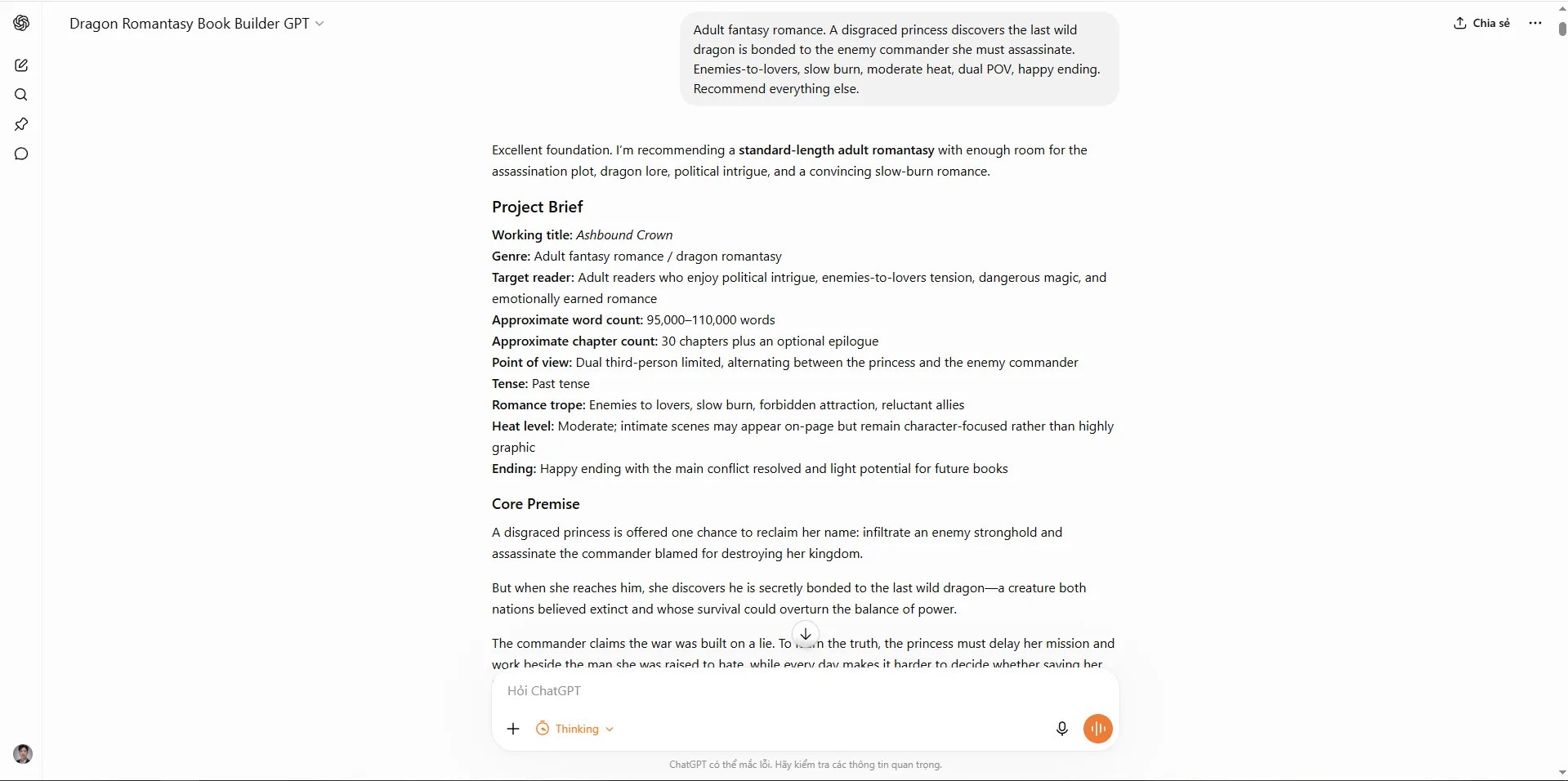
The workflow is deliberately linear. A writer supplies one sentence describing the story they already have in mind, answers a handful of plain-language questions — pacing, point of view, heat level, whether the ending is happy or bittersweet — and the system converts those answers into locked story assets. Nothing is drafted until those foundations exist on paper.
Phase one
Build the canon
The workflow opens with a short intake in plain language, then produces a project brief, a heroine bible, a dragon-hero bible, a supporting cast map and world and dragon-lore rules — each approved by the writer before anything is drafted.
Phase two
Map the bond
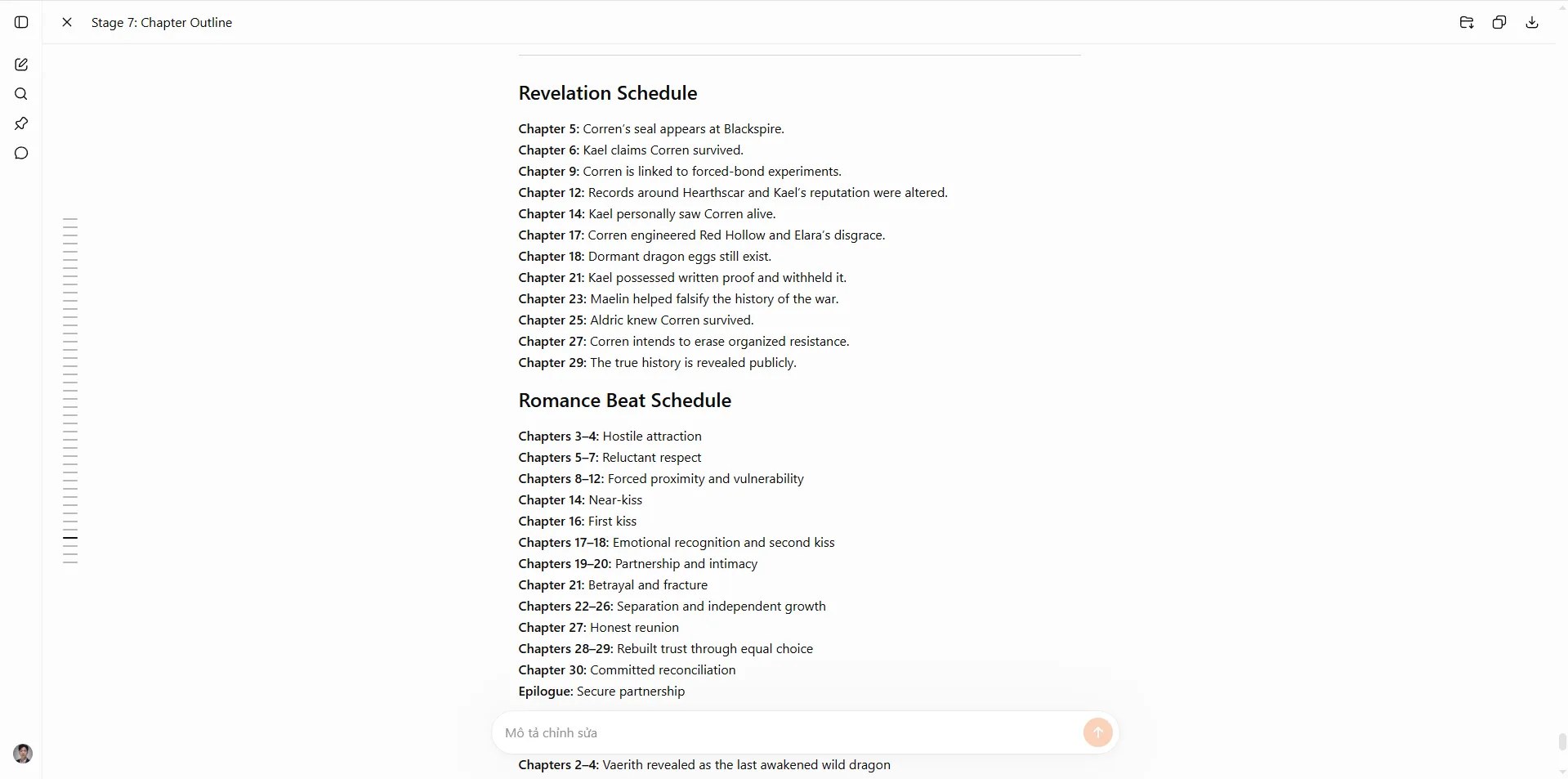
Next comes structure: a romance progression map, a schedule for when secrets and reveals land, a four-part plot architecture and a full 30-chapter blueprint with chapter titles and goals.
Phase three
Draft the book
Only then does prose begin. Drafting is guided chapter by chapter from the approved blueprint, starting with Chapter One, with additional prompts for revision and publishing preparation.
The practical consequence is that structure begins to emerge from earlier answers rather than from guesswork. If the heroine's wound is a betrayal by her own family and the dragon-hero treats their bond as a curse, the framework can place the central betrayal and the first romantic concession at defensible points in the chapter list — and explain why they belong there. For a writer who has never outlined a novel, that reasoning is arguably more valuable than the outline itself.
Key features
Based on the vendor's own product information, the system is organised into four connected modules plus two bonus kits. The features below are the ones most relevant to how a writer would actually use it.
Story concept development
A single-sentence premise is expanded into a defined concept: genre expectations, point of view, heat level, tone and ending type are settled early rather than discovered mid-draft.
Character development
Lead characters are built around opposing emotional wounds, which is what gives a romance plot its natural resistance. Supporting cast and antagonists are mapped alongside them.
World and dragon lore
A world bible captures setting rules, magic limits and how dragon bonds function, so later chapters draft from fixed canon instead of inventing new lore on the fly.
30-chapter novel framework
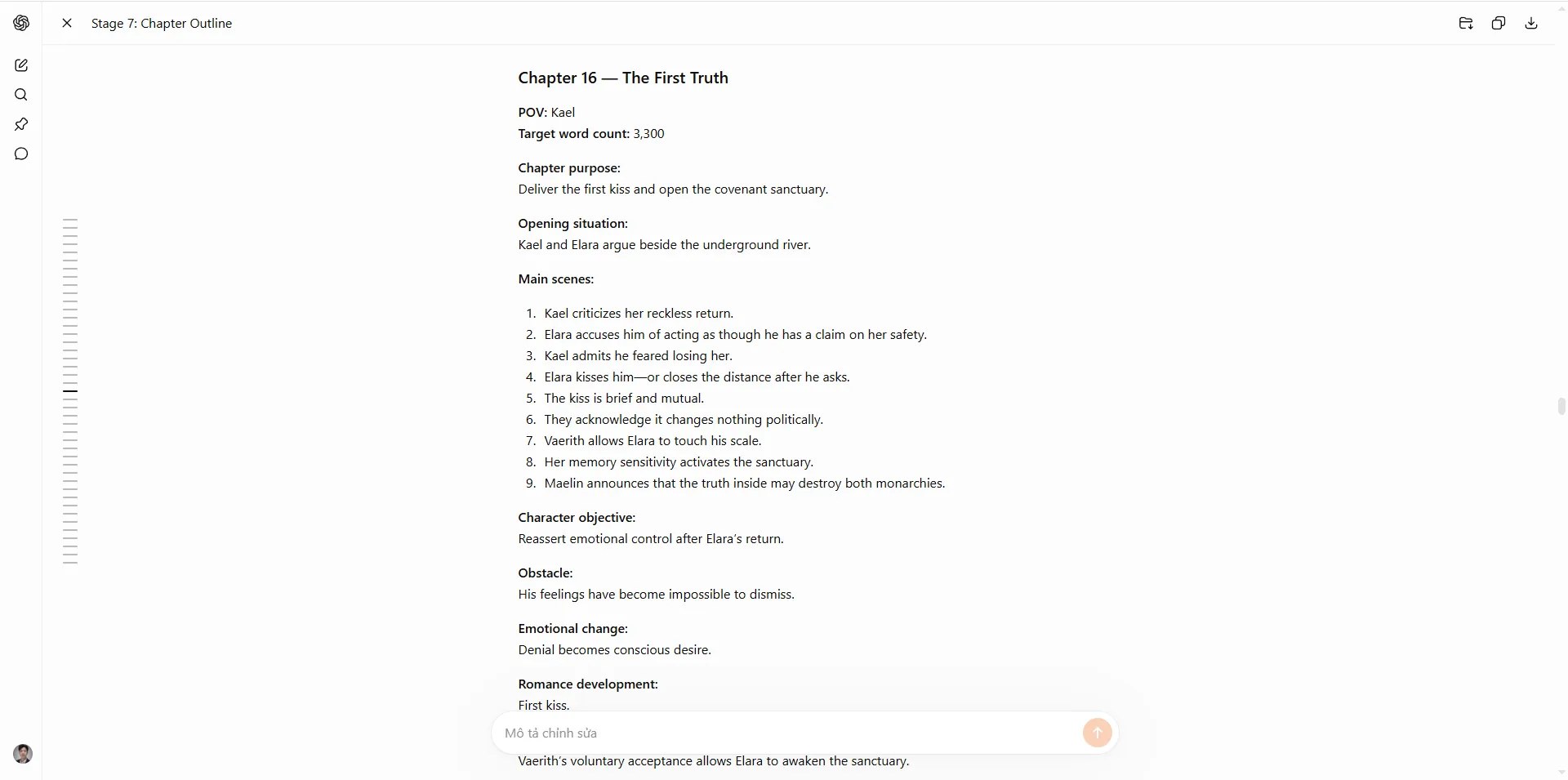
The centrepiece output is a complete chapter-by-chapter blueprint with titles, goals and turning points, plus an epilogue slot — a structural spine rather than a vague summary.
Revelation and pacing schedule
Secrets, betrayals and romantic milestones are placed on a timeline before drafting, which is the part inexperienced outliners most often get wrong.
First-chapter drafting and revision
Chapter One is drafted from approved decisions, and a revision kit supplies editing prompts for voice, dialogue and emotional specificity.
Who is it for?
The audience is narrower than most AI writing tools, and that is a genuine part of the proposition. The framework assumes a dragon-centred fantasy romance, and its structural advice is tuned to that genre's reader expectations.
- Aspiring authors who have a premise but freeze at the outlining stage
- Fantasy and romance writers working specifically in the romantasy space
- Dragon-romance writers who want genre-aware structure rather than generic plotting advice
- Independent authors preparing a first self-published manuscript
- Writers curious about AI-assisted workflows who still intend to edit and own the prose
- Anyone who has repeatedly abandoned a story around chapter three
It is a poor fit for writers working in other genres, for anyone expecting a finished literary manuscript without personal editing, and for authors who want to delegate the creative decisions entirely. The workflow is question-driven; a writer unwilling to answer and approve will get generic results.
AI-assisted writing and creative control
The most useful way to read this product is as scaffolding rather than authorship. The AI supplies order, prompts, continuity references and a first pass at prose. What it cannot supply is judgement: which of two character motives is more interesting, whether a scene earns its emotion, where the writer's own voice should override a smoother machine sentence.
A structured draft is a starting position, not a finished book. The author's editing, originality and creative direction remain the deciding factors in whether a manuscript is worth publishing.
The vendor is reasonably direct about this: AI output requires review, results vary, and the included revision kit exists precisely because first drafts read like first drafts. Writers should also treat platform policy as their own responsibility — several marketplaces now require disclosure of AI-assisted content, and originality checks remain the author's obligation.
Pros and considerations
Strengths
- A clear, ordered workflow that replaces the blank-prompt problem with sequenced decisions
- Structural output — chapter titles, turning points, revelation timing — that beginners rarely produce unaided
- Genre specificity: the framework is written for dragon-centred fantasy romance, not fiction in general
- Low one-time entry price relative to plotting courses and coaching programmes
- Editing and publishing-prep prompts extend usefulness past the first draft
- Story assets remain reusable across more than one project
Considerations
- A ChatGPT account with Custom GPT access is required and is not included in the purchase price
- Output quality depends heavily on the detail of the writer's own answers
- AI drafts still need substantial human editing before they read like a finished novel
- The framework is narrow by design — it is not suited to genres outside fantasy romance
- Message limits and model behaviour are controlled by the platform and can change
- Authors remain responsible for originality checks, trademarks and any AI-disclosure rules on publishing platforms
Our editorial assessment
AI-assisted creative writing has split into two broad camps. On one side sit general purpose assistants that will write anything and structure nothing. On the other sit narrow, opinionated systems that trade flexibility for a defined path. Dragon Romantasy Book Builder belongs firmly in the second camp, and that is where we think its value sits.
Where it helps most
Turning a long-held premise into approved characters, canon and a chapter map within a single focused session.
Where effort remains
Line-level prose, voice and emotional credibility still require the author's revision work.
How to judge it
By whether it produces a structure you would defend to an editor — not by word count generated.
At the listed one-time price, the comparison is not really against other software. It is against a plotting course the buyer may never finish, or another year of the story staying in a drawer. Judged on that basis, a system that reliably produces a defensible 30-chapter structure and a readable opening chapter is a proportionate purchase — provided the buyer accepts that the manuscript's quality will ultimately reflect their own editing.
Final thoughts
Dragon Romantasy Book Builder is worth exploring if you write, or want to write, dragon romance or fantasy romance and your obstacle is structure rather than imagination. It is a focused, sensibly ordered development tool with an honest scope: it will help you decide what happens and in what order, and it will draft from those decisions.
It is not the right purchase if you write in other genres, if you need a hands-off ghostwriting service, or if you are unwilling to revise AI output before publishing. As always, confirm current pricing, inclusions, platform requirements and refund terms directly with the vendor before buying — and check our other reviews if you are comparing AI tools across categories.
Dragon Romantasy Book Builder
Check the current offer, feature tiers and refund terms directly with the vendor before you buy.
More reviews
- BIOHACK-IT Women’s Health & Hormones Workshop Review: Miami 2026 Event Guide
- HighLevel Bootcamp Review: 30-Day Free Trial + Live Training
- AI Business Summit 2026 Review: What to Expect, Speakers & Event Details
- BioStack Review 2026: Features, Pricing, Pros & Who It's For
- LeadFlux AI Review 2026: Features, Pricing, Pros & Who It's For
- ProsperaBuilder Review 2026: Features, Pricing & Who It's For